

Visionary Storytellers for a New Age

Updated: Jul 20
The Rise of Intuitive Learner-Educators in Life and Literature

One intrusive thought periodically buzzes about like a gnat while I revise a literary submission. Yeah, yeah, I hear it, but it’s barely a blip. Nonetheless, I find myself occasionally swatting it away, attempting to rid my environment of any distraction that would break my concentration.
I admit to having little tolerance for anything attempting to pull me out of flow state. I am a Cancer after all, who gets a little crabby when pulled out of whatever coziness she’s currently enjoying. Water signs of the zodiac are all about flow — of creation and intuition as well as emotion. Besides, that one little gnat of a thought is likely just some residual whisper from that old imposter syndrome; the one that used to constantly and loudly criticize me.
A transformative experience years ago allowed me to show that silly, societal syndrome the door out of my sacred temple. Since then I’ve continued doing the necessary work, practice by practice and layer by layer, to show up as genuinely as possible. That silly little imposter doesn’t live here anymore and we both know it.
But that doesn’t keep the occasional limiting belief from showing up on my doorstep expecting shelter. Decades of doing this work allow me to understand that this is often a sign of reaching an integration point, where lessons are now making a home within me and the learning becomes embodied.
Embodied learning reaches beyond understanding with mind’s thinking alone and expands into being experienced through the body. Our bodies are active participants in our learning and growth, serving as a conduit to deeper knowing.
Prior to full integration, new depths of learning through the lived experience come with a certain amount of discomfort. Like wearing a new pair of shoes that need “breaking in”, the discomfort wears away in due time. Soon what was once uncomfortable becomes quite comfortable. Once the learning becomes a natural part of one’s being, it then has the capacity to support new opportunities for growth, signaling a time to “level up” into new learning.

Being a Conduit and Leveling Up
I stop the mindless batting at the thought that just won’t leave. I hold it in awareness, get curious, and begin asking questions. I listen for the lessons intuition delivers. I contemplate what wisdom is calling me to do next. Answers begin to reveal themselves:
The story I’m currently revising is not typical of the publication to which it will be submitted. Its focus — the intuitive work that I do and its transformative properties — is rarely discussed publicly outside of certain spaces and communities. It is rare to find stories on this topic outside of publications expressly for these realms, or platforms large enough to hold them along with multitudes of other topics. And the time has come for that to change.
Claiming Self as Intuitive
Turns out my “gnatty thought” was not some uninvited guest out to stymie my creativity or thwart my progress after all. It was an invitation to receive a message of greater significance than a limiting belief. In partnering with wisdom I am gifted a key; one I hadn't been aware of missing. This key is capable of unlocking new opportunities and guiding me towards a field full of possibilities just awaiting my arrival.
Attuned to intuition, I’ve received messages like this my whole life. Following these nudges, I'm often guided towards synchronicities and fulfilling experiences. I’ve come to rely upon the information gained through my “clairs,” the intuitive sensibilities available to us all, (clairvoyance, clairaudience, etc.) in equal proportion to the data gained from my physical senses…sometimes more so. I rely upon this guidance daily, both personally and professionally.

Intuitive Teaching
Jessica Maddry, education consultant and co-founder of Loop + Ledger, describes intuitive teaching as, “an approach where educators rely on their innate ability to connect ideas, interpret classroom dynamics, and adapt instruction to meet learners’ needs…intuitive teaching emphasizes the ‘big picture’—clarifying the relationships between ideas and fostering a holistic understanding.” Indeed!
Jesse Katen, a leadership development professional, asks us to “imagine a vision of education that acknowledges that our teachers and students are actual human beings. Beyond that, they are, in fact, artists. There is a role for inspiration, for spontaneity, and for play.” Yes, indeed! I have held this vision for over three decades, ever since my training to become an elementary educator. Katen speaks my language, one in which I continue to discover and play with combinations of new words.
Katen continues, “Cutting-edge neuroscience continues to affirm what creative individuals have already understood for centuries: just because there are aspects of human experience that defy rational understanding (for the moment) doesn’t mean that they are not critically important to explore and utilize.” Yes! I recognize the truth of these words. While pursuing a degree in transpersonal psychology, I devoured studies focused on aspects of neuroscience and physics as integral to creative processes and living intuitively.
The skills and knowledge I’ve gained from formal education, professional development and my own lived experience, lead me to strongly resonate with Katen’s concept of intuitive teaching: teaching that “acknowledges that the primary conduit for learning is subjective, embodied experience,” that we “live and learn through subjective experience: time spent, environments encountered, and changes felt.”

As a classroom teacher, my intuition served me (and my students and colleagues) just as much as my formal training in education. To read a room, a person, or a moment and understand what needs are asking to be met as well as how to meet them, is key to guiding a collaborative community of learners.
The aspects of intuitive teaching that Maddry and Katen describe touch on the part of my story “in question” and confirm what intuition is delivering me today. There is both interest in and the need for stories like mine to be told in ever-expanding circles, allowing the intuitive nature of life to become less mysterious and more accessible to an ever-expanding audience. The time has come!
This truth registers in my body and moves me to explore deeper…
Intuitive Learner-Educators
I’ve felt more comfortable in publicly claiming myself as an intuitive since earning my M.A. in Transpersonal Psychology. I left classroom teaching to pursue a new kind of work that requires a new kind of title. At first, I figured using labels such as Intuitive Educator/intuitive teaching would best encapsulate what I do. But that leaves out one word from the title/job that without its presence, the balance and wholeness of what I do would be left unnamed.
To leave out the learner part of my new job title would leave out the reciprocal (and often paradoxical) nature of teaching and learning. I’ve noticed over the years that members of learning communities are more present and engaged when the “official authority” or educator/leader in the room shows up as both a learner and an educator.
It is the official leader — the “voice of authority” of the learning community — who, when demonstrating access to both the learner and the teacher aspects of self, makes a powerful difference in the group experience within the learning environment.

The role that I really play, no matter what the job I’m doing, is in service of personal and collective transformation. It is a role I invite others to play in terms of honoring one’s relationship with self while being in relationship with others. To not name learning in my title would be to leave out one of the best nuggets I learned from John G Sullivan when he advised his students to “begin with yin.”
Begin with YIN. Begin with Yin.
Receive, then give. Receive, then give.
Begin with YIN. Begin with Yin.
Listen, then speak. Listen, the speak.
Begin with YIN. Begin with Yin.
Follow, then lead. Follow, then lead.
Begin with YIN. Begin with Yin.
Be still, then serve. Be still, then serve.
Begin with YIN. Begin with Yin.
~9 Chants -- from John to You. John G. Sullivan, Tai Sophia, Feb. 2011
I embrace Sullivan’s approach along with an “educator-learner” framework, where instructors actively learn alongside their students. Both are essential in my work. A combination of these concepts allows me to land on my new job title; Intuitive Learner-Educator (ILE) and I know I’m not the only one.
Btw: I’m diggin’ the parallel of my new acronym ILE with the suffix -ile, meaning "capable of," "tending to," or "pertaining to." I just love catching echoes of theme!
Over several years, I’ve found a treasure trove of my own ILEs (primarily, though not exclusively women) on TikTok discussing a wide range of subjects. These individuals are not merely creating content, they are sharing new ideas and stories, expanding minds in a wealth of nuanced knowledge and doing their part in our collective evolution. These creatives/creators, and many of those who follow them, are Intuitive Learner-Educators. Whether we post original content or not, many of us are visionary storytellers and, despite much effort to hide us, our numbers are rising.
Listening to Wisdom
As for the wisdom delivered via my intuition today, I first ask: what is it about my story that feels “in question?”
Quite effortlessly, the answer lands. The issue “in question” with my story revolves around how “compelling” publishers will find its conflict. I contemplate this until wisdom shares more:
Stories for the new age we are entering cannot be constructed using blueprints from the era we are leaving behind. Stories of the new age will be grounded in embodied learning and intuitive teaching, requiring a different design from what has come before.
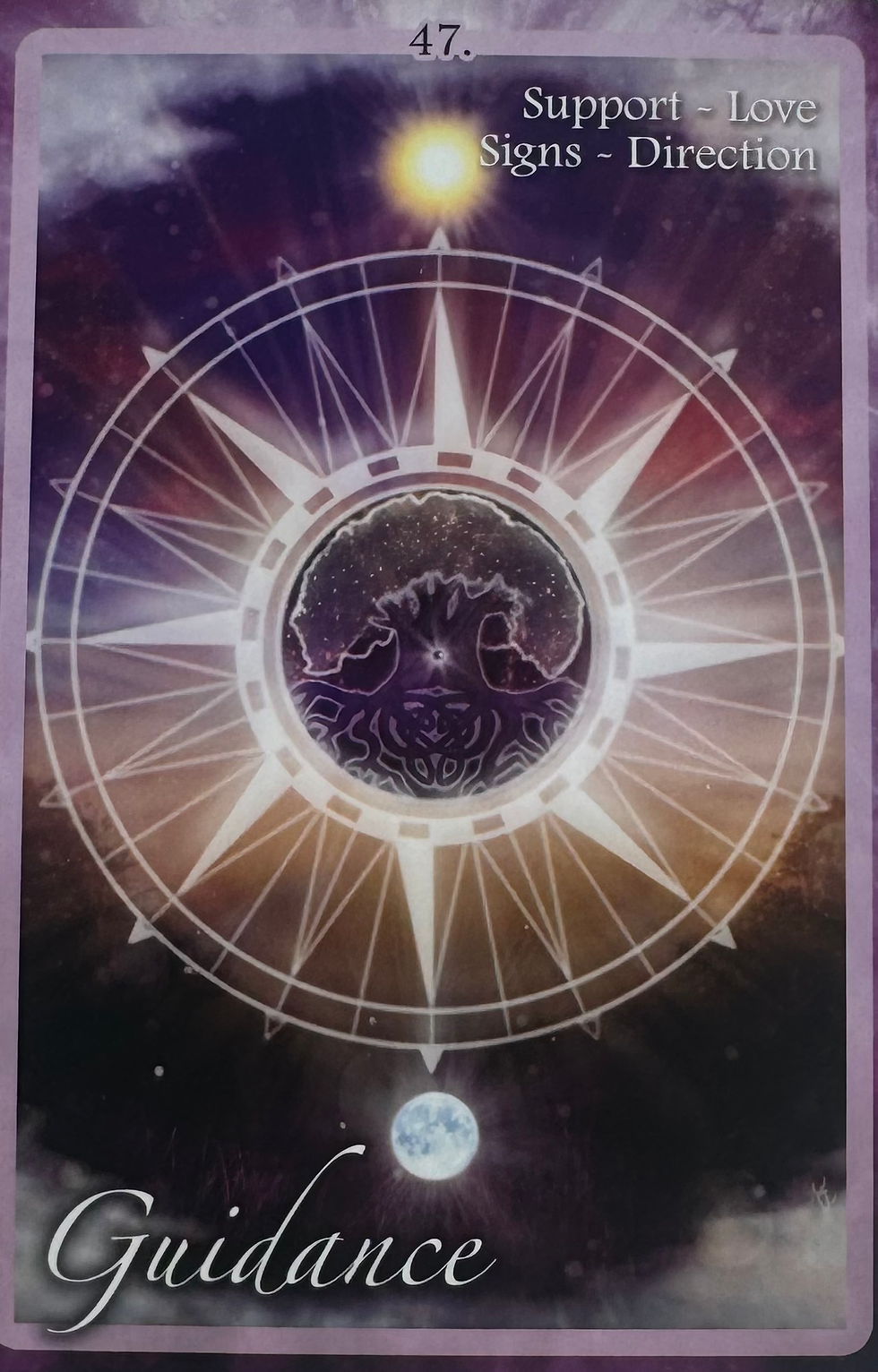
There really is no question for me about the story itself. This isn’t doubt at my door, it is intuition with an invitation to recognize a need within the collective around the concept of conflict. I see a great need for restructuring our concept of conflict, both within our lives and the literature we create to reflect us. The time has come for the collective to move with more ease when engaged in conflict with each other and within ourselves.
No doubt, only intuition inviting me to come out and play! I am beckoned to frolic about where my “deep gladness meets the world’s great need,” as Frederick Buechner describes it. This meeting point, according to Buechner, indicates one’s “true vocation.” Yes! When earning my master’s degree, I specialized in “leadership and conflict transformation.”
Conflict as Construct
In our current culture of consensus, conflict tends to get a bad rap. For many, the mere thought of it creates such discomfort that we handle conflict poorly, even when attempting otherwise. Many avoid conflict altogether at great cost.
Avoidance of conflict does the individual, their relationships, and society a great disservice; it costs us peace in the moment, our own peace of mind, and peace in our relationships.
I recognize how our inculcation around conflict, and subsequently our consistent inability to handle it with care, is operating as designed. The largest systems at work in our society were designed for us to treat conflict very poorly; designed to have us completely tied up in knots at the mere thought of conflict.
When conflict arises, we tend not to handle it, or each other, with care. This inability to handle conflict well is a barrier to connection and therefore a tool of separation. In times of collective instability and fear, barriers to connection keep the collective fearful, divided, and outraged. But there are much healthier ways for us to be with, and use the energy of, conflict.

My next installment of Visionary Storytellers for a New Age focuses on how to refine our collective concept of conflict in life and literature, sharing a “new” design for Intuitive Learner-Educators who are called to write stories for the new age we are entering and building together. Until then, I leave you with this:
Whether accepted for publication or not, I believe in my story’s approach to conflict. It shows the audience new ways to both handle and write about conflict. There are no lingering doubts about the opportunities my offerings allow others. Nor do I doubt my abilities to discuss, model and teach this new way to be with conflict, all while continuing to deepen my understanding of it. I am so thankful that exploring this “gnatty thought” has led me to wisdom’s clarion call; the time has come for me step into new ways of teaching conflict transformation. Marching orders received!
If my thoughts here have resonated with you, raised your curiosity, disrupted a habitual pattern of thought, expanded your thinking, or inspired you to share your own thoughts, then I am glad they have served you. And I invite you to continue this conversation with me as we build this new way for our new age, together.


Comments